
How to Source Handwoven Leather Bags from India: A Complete Guide for Boutique Buyers

Published by Stysion | Reading time: 9 min
There is a moment every boutique buyer knows well.
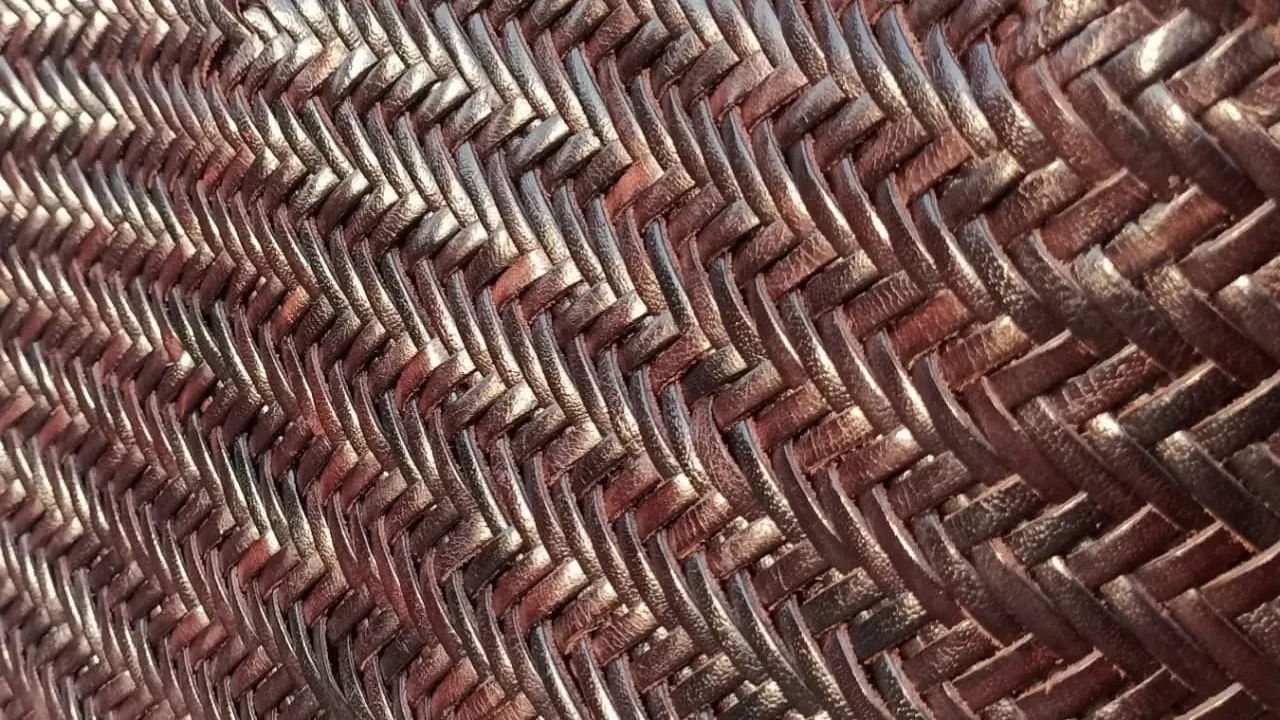
You are at a trade show, or scrolling through supplier catalogs at midnight, and you see a bag that stops you. The weave is tight. The leather has weight to it. The stitching doesn’t look like a machine did it — because it didn’t. You think: who makes this, and can I actually work with them?
If that bag was handwoven leather, there is a very good chance it came from India. Or it should have.
India has been producing leather goods for centuries. The tanneries in Kanpur alone supply raw material to manufacturers across Europe. And yet, most international boutique buyers still don’t know how to source directly from Indian makers — they go through middlemen, pay extra, and often lose the story behind the product in the process. This guide is for buyers who want to change that.
Why India — and Why Handwoven Specifically
Before we get into the sourcing process, let’s address the obvious question: why not China, Morocco, or Turkey?
Each has its strengths. China offers scale and speed. Morocco has a distinct aesthetic. Turkey makes excellent structured leather goods. But for handwoven leather bags — the kind where strips of leather are actually interlaced by hand, not pressed through a machine with a woven texture — India is in a different category.
Here’s why.
Craft density. India has clusters of leather artisans concentrated in specific regions — Kanpur, Jaipur, Chennai, Kolkata — where skills have been passed down across generations. Weaving leather by hand is not something you learn in a factory training program. It takes years. In India, you find entire communities where this knowledge lives.
Material access. Kanpur has one of the largest leather processing belts in Asia. Artisans here work with raw material sourced locally, which means better traceability, shorter supply chains, and often, better leather quality at the same price point.
Price without compromise. A handwoven leather tote that retails for £150–£200 in a European boutique can be manufactured in India for a fraction of what it would cost in Italy or Portugal. Not because corners are cut — but because labour costs are lower and the artisan ecosystem is mature.
Customization is the norm, not an exception. Most Indian manufacturers who work with woven leather are small to mid-size operations. They are used to doing custom work. Custom colors, custom dimensions, custom weave patterns — these conversations happen naturally here, without the minimums and lead times that larger factories impose.
What “Handwoven Leather” Actually Means
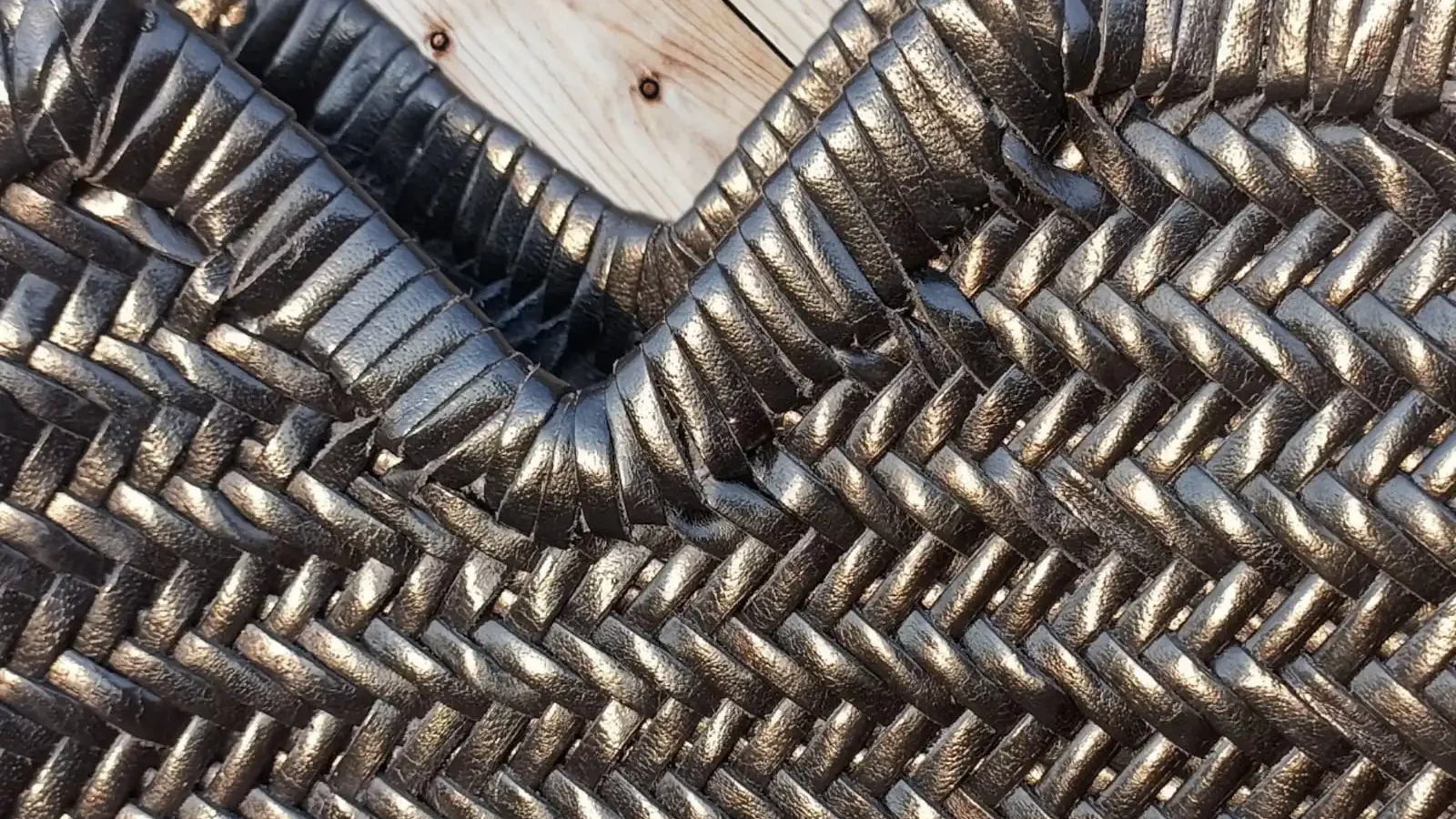
This sounds obvious, but it’s worth saying clearly: handwoven leather bags are not bags made from woven fabric with a leather coating. They are bags where strips of actual leather are woven together — interlaced by hand — to form the body, flap, or panels of the bag.
The process looks something like this:
The leather is first cut into long, flat strips. The width of the strip, how tightly it is packed, and the pattern of the weave — all of this determines the final look and feel of the bag. A tight, flat weave gives a cleaner, almost architectural look. A looser weave gives the bag more texture and movement. Some artisans alternate strip widths within the same panel to create gradients or geometric patterns.
Then comes the actual weaving — which is slow, precise, and physical work. A skilled weaver can take anywhere from four to eight hours to complete a single panel, depending on the size and complexity. The panels are then assembled, edges finished, hardware attached, and the bag goes through a final quality check before packing.
No two handwoven bags are identical. That is the point. And for boutique buyers who are selling to customers who want something that isn’t available at every other store, that is the value.
Who Are You Actually Looking For?
Not every leather manufacturer in India works with woven leather. And not every woven leather maker is set up to handle export orders.
The type of manufacturer you want is usually a small to mid-size workshop — ten to forty people — with a dedicated weaving section and experience shipping to Europe or the US. They will have a sampling process, know what documentation export orders require, and be comfortable communicating over email or WhatsApp with international buyers.
Here is what distinguishes a good sourcing partner from a bad one:
They have a sample process. Before taking any order, a genuine manufacturer will offer to make you a sample — either at cost or for a small sample fee. If someone is quoting you bulk prices before you’ve even discussed samples, walk away.
They understand lead time honestly. Handwoven bags take time. A realistic manufacturer will tell you a minimum of four to six weeks for a first production run, including time for the sample approval. Anyone promising two weeks for a new style is either cutting corners or hasn’t thought through your order yet.
They can show you previous work. Ask for photos or videos of their workshop and finished products. Ask if any of their current buyers are in Europe or the US — not for names, but just to confirm they have export experience. Most genuine makers are proud of this and will share without hesitation.
Communication is direct. You should be talking to the person who actually runs production, not a sales agent sitting three layers removed from the workshop floor. The more directly you can communicate with the maker, the fewer things get lost in translation.
The Sourcing Process, Step by Step
Here is how a first sourcing relationship typically works — from first contact to first order.
Step 1: Send a clear brief.
Don’t send a vague inquiry. Tell the manufacturer exactly what you are looking for: the type of bag (tote, crossbody, clutch), the approximate dimensions, the leather type you prefer (full grain, top grain, vegetable tanned), the weave style if you have a reference image, the colors you need, and your approximate quantity. The more specific you are upfront, the faster you will get a useful response.
Step 2: Request a sample.
Once you find a manufacturer who can work with your brief, request a physical sample. Expect to pay for it — somewhere between $30 and $80 depending on the bag type — and factor in shipping. This is not a negotiation point. It is a standard part of the process, and it protects you as much as the manufacturer.
When the sample arrives, check these things: the tightness and consistency of the weave, the quality of the edge finishing, the weight and smell of the leather (genuine leather has a distinct smell; bonded or PU leather does not), the hardware quality, and how the stitching holds under light tension.
Step 3: Confirm your MOQ.
Minimum order quantities from Indian handwoven leather makers typically start at 50 to 100 pieces per style. Some makers will go lower — 20 to 30 pieces — for established buyers or repeat orders. Be upfront about what you need. If your first order is small, say so. A maker who wants a long-term relationship will often work with you on the minimum for the first run.
Step 4: Negotiate pricing clearly.
Get pricing that clearly breaks down: per-piece cost, packaging cost, and shipping terms (most Indian exporters will quote you ex-works or FOB). Understand what is included and what isn’t. Ask about the price for reorders — usually it drops slightly once the molds and patterns are set.
Step 5: Confirm production timeline and payment terms.
Standard payment terms for first orders are usually 50% advance, 50% before shipping. Once you have an established relationship, some makers will move to 30/70 or even net-30. Don’t expect net-60 from a small manufacturer on a first order — it’s not sustainable for them.
Step 6: Stay in contact during production.
Ask for progress photos at least once during production. Not because you don’t trust the maker — but because catching any issue early is far easier than dealing with it after the bags are boxed and labeled. Good manufacturers welcome this. It shows you are engaged and serious.
What Boutique Buyers Often Get Wrong
A few mistakes come up again and again when international buyers source from India for the first time.
Going for the lowest price. Handwoven leather bags require skilled labour. If a quote comes in significantly below the market rate, something is being compromised — the leather grade, the weaving quality, or the finishing. The margins are already good when sourcing from India. Chasing the absolute bottom is how you end up with product you can’t sell.
Skipping the sample. “I’ve seen their catalog photos, I’ll just order.” This always goes wrong eventually. Photos don’t tell you how the leather feels, how the weave holds up, or whether the hardware is solid. Order the sample.
Not being clear about packaging requirements. European and US customs have specific documentation requirements, and your packaging might need specific labeling — country of origin, material composition, etc. Clarify this with your manufacturer before the order is packed. Surprises at customs are expensive.
Treating it as a one-time transaction. The best sourcing relationships in this industry are long-term. When you come back with a second order, the manufacturer already knows your standards. Lead times get shorter. Pricing gets better. And the maker starts to understand your brand well enough to suggest new styles that fit what you sell. Build the relationship, not just the order.
A Note on Ethical Sourcing
This matters more than it used to.
Many of your customers care about where their products come from. They want to know the person who made their bag was paid fairly, worked in decent conditions, and has continuity of income.
When you are sourcing from a small workshop in India, you are directly supporting individual artisans — not a factory floor where workers are anonymous. That is the story worth telling. Ask your sourcing partner about the artisans they work with. Get names, if they are willing to share. Take photos of the workshop during a visit or ask for them.
That story — a weaver in Kanpur who has been doing this for fifteen years, who learned it from her mother — is worth more to a boutique customer than a swing tag that says “handmade.”
Getting Started
If you are ready to start exploring suppliers, here is where to begin:
Start by searching Indian leather goods exporters on platforms like IndiaMart, Alibaba, and LinkedIn. Narrow your search specifically to handwoven leather bags, and look for suppliers who have export experience listed in their profile.
Shortlist three to five options. Send each a brief with your requirements. See who responds clearly, quickly, and with real information — not a generic catalog. The quality of that first response tells you a lot about how the relationship will go.
Then ask for samples. Compare them side by side. You will know quickly which maker understands what you are looking for.
Why Work With a Dedicated Woven Leather Maker
There is a difference between a manufacturer who makes woven leather bags as part of a large catalog and one whose identity is built around it.
When woven leather is what a maker does — not one SKU among hundreds — you see it in everything. The weave patterns are more considered. The leather selection is more deliberate. The maker has a point of view, not just a production line.
At Stysion, every bag we make is handwoven in our workshop near Kanpur. Our weavers work with the same leather, the same patterns, and the same care for every order — whether it is 50 bags or 500. We work directly with boutiques, independent retailers, and labels who want something they can genuinely stand behind.
If you are sourcing handwoven leather bags for the first time, or looking for a new maker who is actually invested in your product, we would love to hear from you.